
How to cope with grief
How to cope with grief
Grief is an experience that touches many parts of life. It can feel heavy, confusing, and sometimes sudden. You may notice physical fatigue, shifting emotions, or changes in routine. None of those reactions are wrong. This article offers gentle, practical ways to move through this time, to find support, and to keep the memory of a loved one close in ways that feel meaningful.
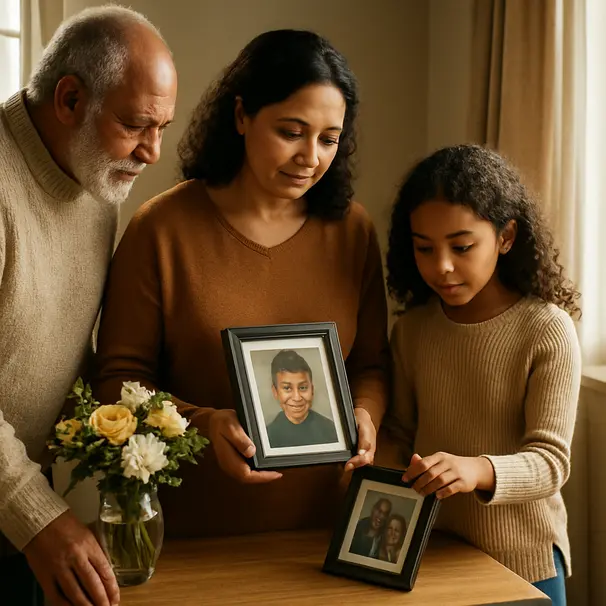
Family members arranging framed photographs at home.
Understand what grief can look like
Grief does not follow a fixed schedule. It can arrive in waves, and different days can feel very different. People often describe sorrow, relief, anger, numbness, or even moments of unexpected calm. These responses may change over weeks, months, or years.
There are some common patterns to watch for. Some days you may be able to manage daily tasks with relative ease. Other days, small reminders like a song, a scent, or an empty chair can bring intense emotion. These ups and downs are a normal part of the process for many people.
It can help to name what you are feeling. Writing short notes, keeping a voice memo, or telling someone a single sentence about the day can clarify emotions. Naming does not take pain away, but it can make the experience feel a little more understandable.
Practical first steps after a loss
- Take care of immediate needs. Gather important documents, make a list of people to notify, and ask a trusted friend to help manage logistics. Practical tasks can feel overwhelming; small lists and clear priorities may ease that burden.
- Allow people to help. Friends and neighbours often want to support you but may not know how. Consider suggesting specific tasks such as meal delivery, childcare, or pet care. Small, concrete offers are easier to accept.
- Rest when you can. Grief shows up in the body. Short naps, gentle walks, and simple meals can keep basic energy levels steadier.
These steps are about pacing yourself. If paperwork, funeral arrangements, or estate tasks become complex, consider consulting a professional for guidance. Legal, financial, or medical advice may be helpful when needed.
Caring for emotional and physical health
Grief affects both mind and body. Consider a few practical ways to look after yourself:
- Keep a simple routine. A predictable day can provide small anchors. Regular sleep and modest meals are important.
- Move gently. Short walks, stretching, or light household activity can help release tension. You don’t have to exercise strenuously. Even brief movement can be calming.
- Notice your breathing. Slow, steady breaths for a minute or two can reduce immediate anxiety. If it feels helpful, try breathing with intention several times a day.
- Limit major decisions. If possible, delay significant choices until you feel clearer. Grief can cloud judgment, so allow time for big decisions.
If you find sleep is consistently poor, or you notice persistent changes in appetite or energy that interfere with daily life, consider reaching out to a healthcare provider or a grief counsellor for support and guidance.

Friends sharing memories outdoors in soft daylight.
Finding and accepting support
No one needs to navigate grief alone. Support comes in many forms.
- Trusted friends and family. Honest, simple conversations can be a relief. You might tell someone, I don’t need answers, I just need company today, or I’d like to talk about a memory.
- Support groups. Many communities and organizations offer groups for people grieving similar losses. Hearing others’ stories can reduce isolation and provide new ways to cope.
- Professional help. Therapists and counsellors can offer techniques to manage distressing emotions and traumatic memories. If thoughts of harming yourself or others occur, seek immediate professional help.
You may also find comfort in creative or solitary practices, such as journaling, making art, or spending quiet time outdoors. These activities can be private ways to process feelings without pressure.
Remembering and memorialising
Holding memories can feel like tending a garden. Different people find different ways to preserve a life.
- Create a memory box. Collect photographs, letters, and small items that recall shared moments. Picking one or two items to bring out on difficult days may feel more manageable than everything at once.
- Share stories. Invite friends and family to share anecdotes, recipes, or favourite songs. Recording those stories, with permission, can become a treasured archive.
- Honour with rituals. A quiet candle, a walk to a favourite place, or planting a tree can be meaningful gestures. Rituals do not have to be elaborate to matter.
Consider that memorials can evolve. What’s helpful now may change over time. Remembrance can be private, shared, small, or large. There’s no single right way to honour someone’s life.

Hands writing a heartfelt condolence note by candlelight.
Navigating anniversaries and triggers
Anniversaries, birthdays, and holidays can return feelings with added force. Anticipation of those dates can sometimes intensify grief. Here are ways to approach them gently:
- Plan ahead. Decide whether you want to mark the day with a private moment, a small gathering, or a low-key activity. Planning reduces the pressure of last-minute choices.
- Be realistic. Expect a range of emotions. You may feel sadness, relief, gratitude, or a mixture of feelings.
- Create new traditions. Combining remembrance with something life-affirming, like sharing a meal or releasing lanterns, can provide a focus that honours loss and supports those who remain.
If an anniversary feels particularly difficult, consider asking a friend to check in or join you. Shared presence can make a palpable difference.

A peaceful cemetery pathway at early morning light.
Daily coping strategies that can help
Small, steady practices can make a big difference over time:
- One-minute grounding. Name five things you can see, four you can touch, three you hear, two you smell, one you taste. This can bring you into the present for a moment.
- Memory practice. Spend a few minutes each day recalling a brief pleasant memory. It can be as simple as a favourite meal or a laugh you shared.
- Limits on social media. Notices and messages can be comforting but also overwhelming. It’s okay to set boundaries.
- Gentle kindness. Treat yourself as you would a friend. If you would offer a companion simple care, try offering the same to yourself.
When to seek more help
You may consider professional support if:
- Intense feelings persist for a long time and interfere with daily life.
- You have trouble managing basic self-care for weeks at a time.
- You feel overwhelmed by thoughts of harming yourself or others.
A therapist, grief counselor, or primary care clinician can help you sort options. Consider talking to a local provider or a trusted organisation that lists bereavement resources. Asking for help is a sign of strength, not weakness.
Supporting someone who is grieving
If you want to support a friend or family member, simple actions often matter most:
- Listen without needing to fix the situation. Often people want to be heard and remembered.
- Offer specific help. Instead of saying I’ll let you know what I can do, say I can bring a dinner on Tuesday or I can pick up groceries this afternoon.
- Remember them over time. Support that continues weeks and months later can be very meaningful.
Remember to care for your own needs too. Supporting someone who grieves can be emotionally demanding. Set gentle boundaries to stay grounded.
Creating meaning while respecting differences
Some people find comfort in faith, community rituals, or philosophical reflection. Others find meaning through actions, such as charity, advocacy, or projects that honour a loved one. All of these approaches may help, and none are required.
Grief interacts with culture, family, and personal history. How you mourn will likely be shaped by many parts of your life. Allow yourself room to try different ways of remembering and to change your approach as time passes.
A few final thoughts
Grief can feel like a long, uneven road. There is no one timetable and no single right way to grieve. It can help to gather small supports: a routine that honours basic needs, a friend who will listen, a memory preserved in a box or story, and professionals to consult when tasks or emotions become too heavy.
Be patient with yourself. Notices of progress can be small: a morning with fewer tears, a phone call that feels easier, or a memory that brings a smile. Those moments matter. Let the people who care about you know what you need, and allow them to be present.
If at any time you feel overwhelmed or unsafe, please seek immediate help from a trusted professional or local emergency services. If you need grief-specific resources, consider reaching out to local community organizations or national helplines that may connect you to counselling and support groups.
You are not alone in this. Many people have walked similar paths and found ways to carry memories forward while learning to live with loss. Take one small step at a time and hold on to the supports that help you through.